Sauna Ventilation Calculator: Vent Size and Airflow
Ventilation is the part of a sauna build people leave until last, then wonder why the top bench is stuffy, the bottom is cold and the timber stays damp for days. A sauna needs a steady supply of fresh air moving past the heater and out again, and the vents have to be big enough to pass it. Enter your cabin size below and this calculator gives you the airflow the room needs, the free area each vent must have, and the duct or hole size that delivers it once the cover is on.
Your sauna's internal size
How the air moves
How the calculator works
Four steps, all of them arithmetic you can check by hand.
- Cabin volume. Length times width times height gives the internal volume in cubic metres.
- Airflow. Volume multiplied by the air changes per hour gives the flow in m³ per hour. Divide by 3.6 to read it in litres a second, which is how extract fans are usually rated in the UK.
- Free area. Free area equals the flow in m³ a second divided by the air speed you allow through the opening. A slower speed means a bigger, quieter vent; a fan can push the same air through a smaller duct at the cost of some noise.
- The hole you actually cut. Divide the free area by the open share of your vent cover. A 60% cover over a 150 mm duct leaves only about 106 cm² open, so the duct has to be bigger than the free area alone suggests. Every hole and duct figure below already has that allowance built in, which is why the duct size jumps once you pick a restrictive cover.
The grille figure matters more than most people expect, and it is the step DIY builds usually skip. A decorative timber vent cover or an insect mesh blocks a good share of the hole behind it, so a duct sized to the bare free area quietly delivers a quarter to a half less air than you planned.
Where the vents go
- Inlet low, near the heater. Fresh air entering close to floor level beside or under the heater gets pulled up through the stones and rises across the benches, which is what makes the heat feel even rather than layered.
- Outlet on the far side. Put the exhaust on the opposite wall from the inlet so air crosses the room instead of short-circuiting between two vents on the same wall. With a fan, low down behind or under the top bench works well; without one, a high outlet plus a gap under the door is the usual arrangement.
- Feed a fan properly. An extract fan can only pull out what the inlet lets in, and the inlet is still gravity fed, so it has to be sized for a gentle passive speed rather than the duct speed the fan runs at. The calculator sizes the inlet separately for that reason, and it comes out noticeably larger than the extract duct.
- Leave a gap under the door. A clearance of roughly a couple of centimetres under the sauna door is the simplest, most reliable secondary path for air, and it costs nothing to build in.
- Make the vents adjustable. Sliding or hinged covers let you close the inlet down while the room heats up and open everything wide afterwards so the timber and benches dry out. Wet timber that never gets to dry is what causes stains, odour and rot.
Two cautions. If you are running a wood-fired stove, its combustion air supply is a separate requirement from bather ventilation, and the stove manual and building control rules decide it. And whatever this calculator says, an electric heater manufacturer's own installation instructions for vent positions and clearances take priority, since ignoring them can void the warranty.
More from Baltic Spa
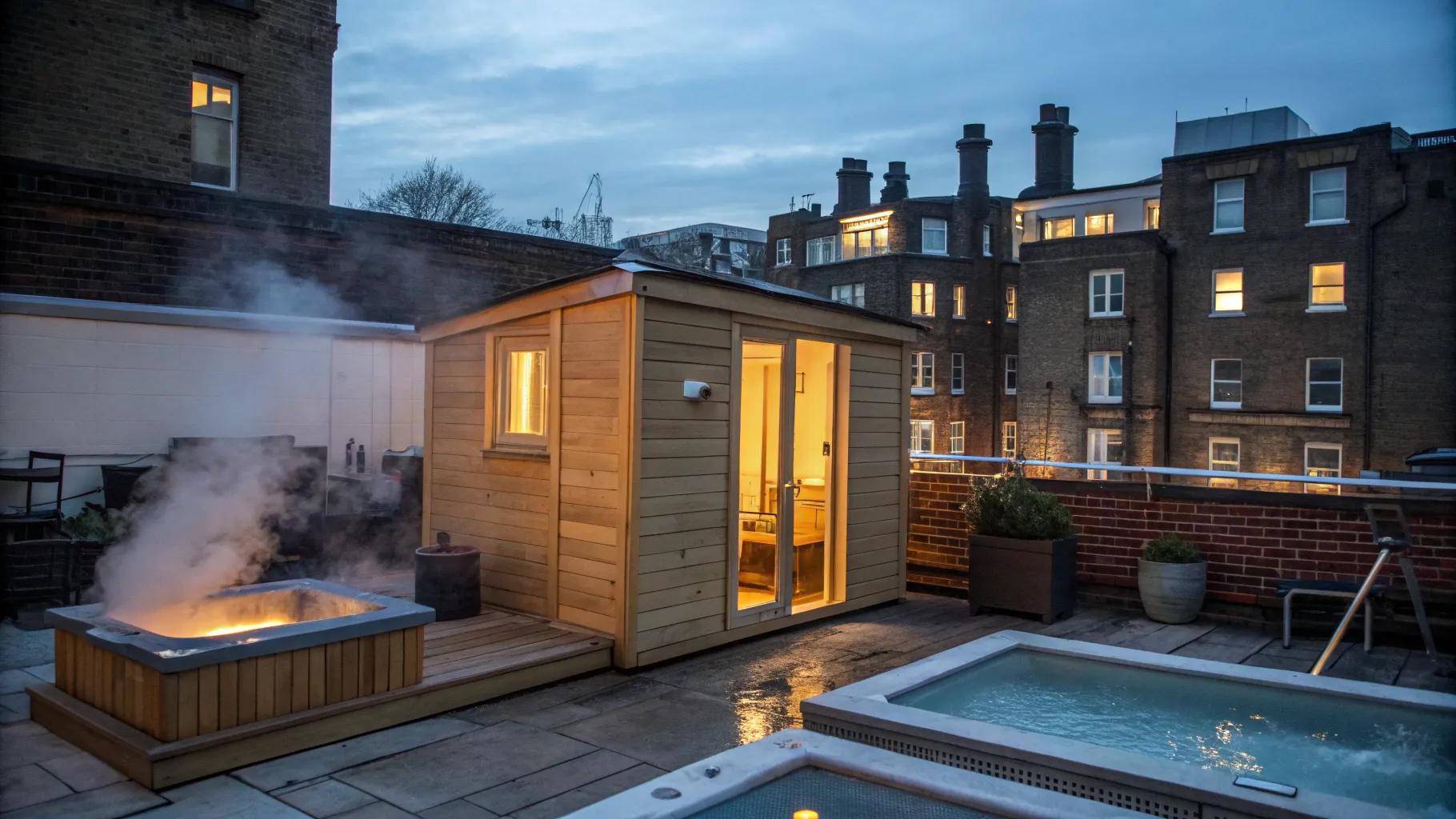 Reviews
The Best Public Saunas in London for 2026, Tested and Ranked
We tested and ranked the best public saunas in London for 2026, from £9.50 community baths to Canary Wharf's 60-person contrast therapy hall.
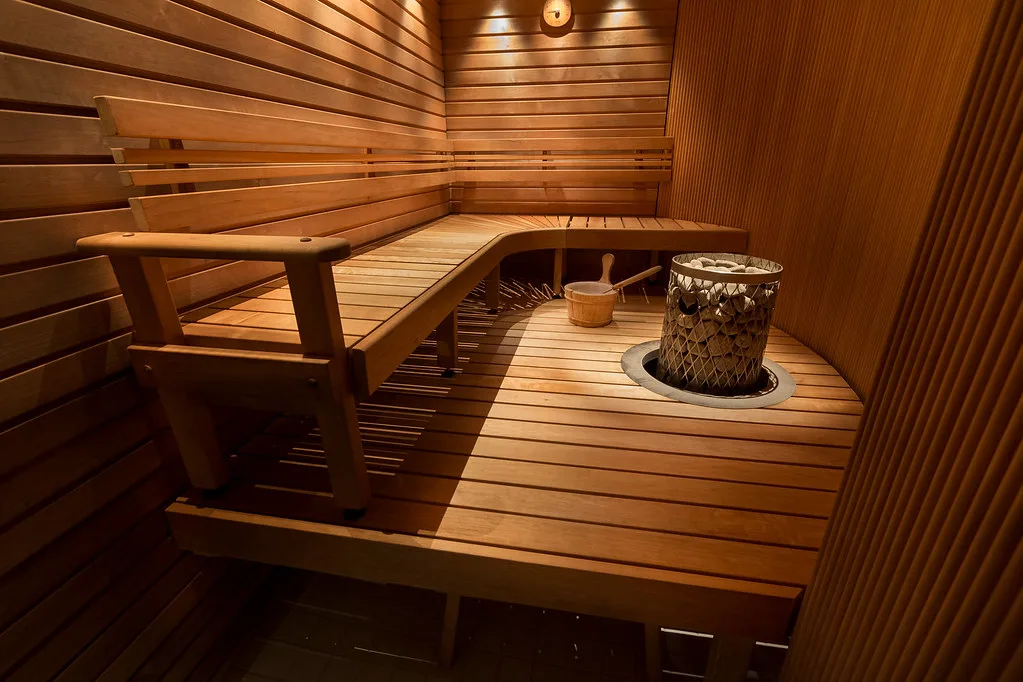 Infrared Saunas
Infrared Sauna Blankets: How They Work and Who They Suit
How an infrared sauna blanket works, what the layers and EMF claims really mean, who they suit and who should avoid one, from an evidence-first UK guide.
Sauna Stones Calculator: How Many Kg of Stones Do You Need?
Free sauna stones calculator: enter your electric heater's kW or your wood stove size and get the recommended stone weight in kg, plus how many boxes to buy.