Do Infrared Saunas Work? What the Trials Actually Show
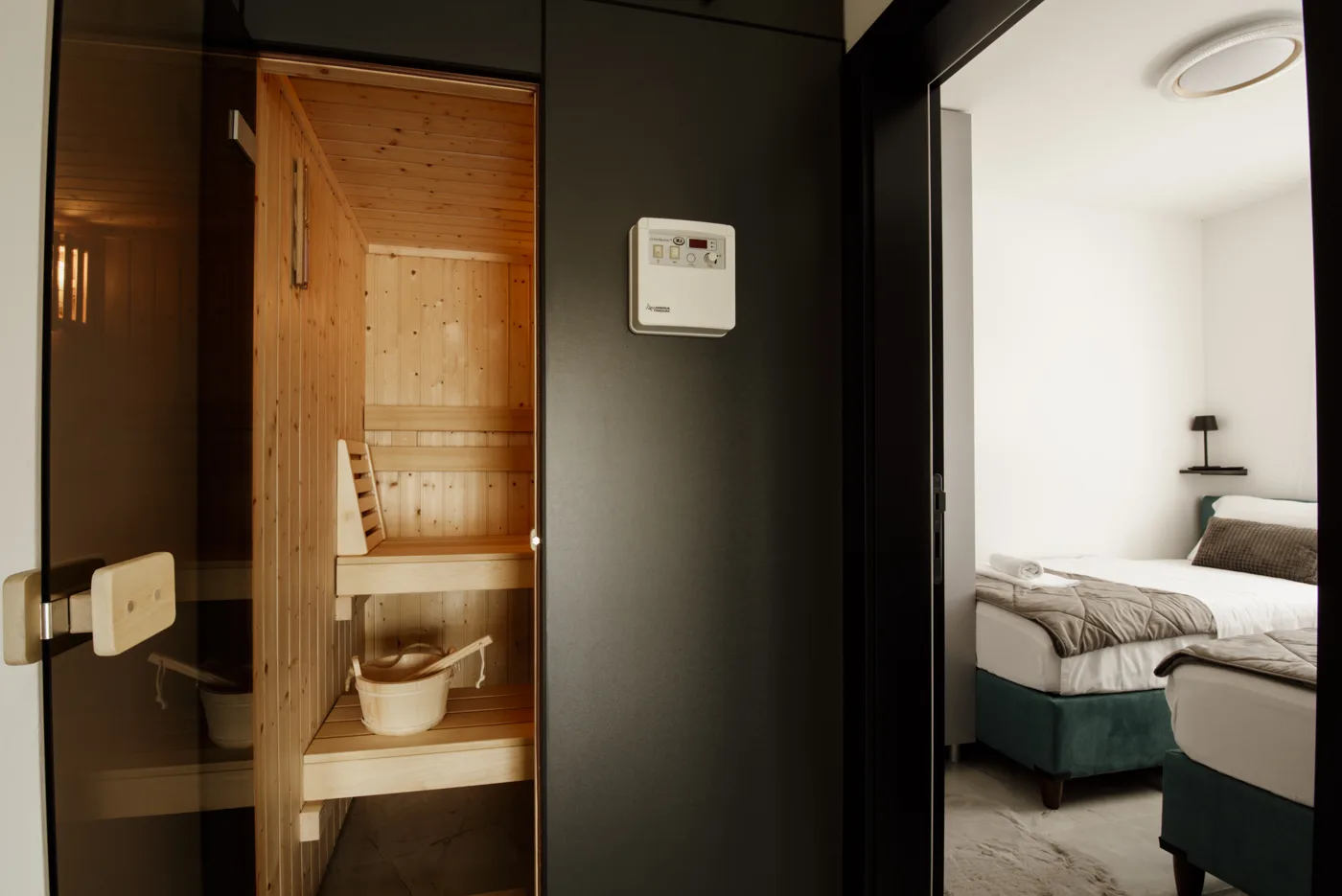
Do infrared saunas work is really four questions wearing one coat, and the answer differs sharply depending on which one you are asking. There is decent randomised evidence for cardiovascular effects. There is reasonable evidence for recovery and comfort. There is no good evidence for detoxification. And the weight loss claim is a measurement error being sold as a benefit.
Here is what the research supports, claim by claim, and the one structural caveat that applies to all of it.
The caveat that changes everything: infrared is not a Finnish sauna
Almost every impressive sauna statistic you have seen comes from Finnish sauna research, not infrared research. The famous one is the Kuopio Ischaemic Heart Disease Risk Factor Study, which followed 2,315 middle-aged Finnish men for roughly 20 years and found a dose-dependent relationship: men using a sauna four to seven times a week had around 50 per cent lower fatal cardiovascular disease risk and substantially lower sudden cardiac death risk than once-a-week users.
That study used traditional Finnish saunas at around 79°C with water thrown on the stones. It was not conducted on infrared cabins.
The distinction matters mechanically, not pedantically. Traditional saunas run at 80 to 100°C; infrared cabins run at roughly 45 to 60°C using radiant heat. The proposed mechanism behind the cardiovascular findings is the rise in core body temperature and the cardiovascular strain that accompanies it, and a lower air temperature does not automatically produce the same core response. Some infrared protocols are designed specifically to achieve comparable core heating at lower air temperature, but “it heats you differently” is not the same as “it heats you equivalently.”
So when a retailer cites the Finnish mortality figures on an infrared product page, they are borrowing evidence from a different intervention. Our traditional vs infrared sauna comparison covers the practical differences.
Cardiovascular: the strongest case, and it is qualified
The best-supported infrared claim is cardiovascular, largely through Waon therapy, a Japanese far-infrared protocol studied in heart failure patients. The WAON-CHF multicentre randomised study reported clinical improvement including ejection fraction and reduced BNP, a heart failure biomarker. That is genuine randomised evidence in a patient population, not a wellness-blog extrapolation.
For healthier people, a September 2025 systematic review and meta-analysis of randomised controlled trials on passive heating and cardiometabolic risk found a potential reduction in systolic blood pressure with systemic heating, with the effect clearest among adults who already had coronary risk factors or established cardiovascular disease. The full review is open access.
Read that carefully. “Potential reduction”, “among adults with underlying risk”. This is a modest effect, most visible in people who have something to improve.
The honest summary of the wider field is that observational studies have been consistently favourable while randomised trials give mixed results, with considerable heterogeneity between studies and a recognised need for standardised protocols and longer trials. That pattern usually means a real but smaller effect than the observational data suggests, plus some healthy-user confounding: people who sauna four times a week in Finland differ from people who do not in ways that are hard to fully adjust for.
Recovery, pain and sleep: plausible, thinner evidence
The recovery case rests on increased peripheral circulation, muscle relaxation and the parasympathetic shift that follows any prolonged heat exposure. Users consistently report reduced muscle soreness and better sleep on session nights.
The evidence base here is smaller and the studies are shorter. Treat it as reasonable rather than established, and note that the subjective outcomes most people care about, feeling looser and sleeping better, are also the ones most susceptible to expectation effects. That does not make them worthless. It does mean you should try before you spend heavily.
Where infrared has a clear practical advantage is tolerability. A 55°C cabin is bearable for 30 to 45 minutes for people who cannot manage 15 minutes at 90°C, which includes many older users and anyone who finds high heat genuinely unpleasant. A session you will actually do beats a superior one you avoid. Our how long to stay in a sauna guide covers sensible session lengths.
Detox: not supported
This is the claim to disregard entirely.
Sweat is not a meaningful detoxification pathway. Your liver and kidneys do that work, continuously, and they do not need help from a heated cabin. There is preliminary, case-report level material suggesting trace amounts of heavy metals such as cadmium, lead, mercury and arsenic appear in sweat, but the quantities are small and the evidence quality is low. It does not support sauna use as a detoxification intervention, and no retailer citing it will show you the effect size.
If a manufacturer leads with detox, treat everything else on the page with corresponding scepticism.
Weight loss: a measurement error
You will weigh less after a session. You have lost water, not fat, and you will regain it as soon as you rehydrate, which you should.
Heart rate does rise in a sauna, and some marketing converts that into a calorie-burn equivalence with moderate exercise. Studies do not support the equivalence. Our does sauna burn calories page goes through the arithmetic, and the sauna water loss calculator will show you what you have actually lost.
Rehydration is not optional. Losing a litre of sweat and not replacing it is how a pleasant session becomes a headache.
So should you buy one?
A reasonable position from the current evidence:
Buy infrared if you want a heat habit you will genuinely maintain, you find 90°C unpleasant, you have limited electrical capacity or space, or you are primarily after relaxation and recovery. The cardiovascular benefit is likely real and modest.
Buy traditional if cardiovascular outcomes are your main motivation, because that is where the evidence base sits, and because the löyly experience is a different thing that many people prefer once they have tried it. See best home sauna UK and home sauna cost.
Do not buy either on the strength of detox or fat loss claims, because neither survives contact with the evidence.
Speak to your GP first if you have cardiovascular disease, low blood pressure, are pregnant, or take medication affecting blood pressure or fluid balance. Our are infrared saunas safe page covers the contraindications, and infrared sauna running costs covers what one costs to use once it is installed.
Frequently asked questions
Do infrared saunas have any proven health benefits? Yes, though narrower than marketed. Randomised evidence supports cardiovascular effects, including improvements in heart failure patients through Waon therapy and modest systolic blood pressure reductions in adults with cardiovascular risk. Detox and fat loss claims are not supported.
Are infrared saunas as good as traditional saunas? For cardiovascular outcomes the evidence base is much stronger for traditional Finnish saunas, including the 20-year Kuopio cohort study. Infrared is more tolerable at lower temperatures, which matters if that is the difference between using it regularly and not.
Do infrared saunas detox your body? No. Detoxification is done by the liver and kidneys. Trace heavy metals have been detected in sweat in low-quality studies, but the amounts are small and this does not support sauna use as a detox intervention.
Do you lose weight in an infrared sauna? You lose water weight, which returns as soon as you rehydrate. Heart rate rises during a session, but research does not support the claim that this is equivalent to moderate exercise for calorie expenditure.
How often would you need to use one to see a benefit? The dose-response data comes from traditional sauna research, where four to seven sessions a week showed the largest associations. There is no equivalent infrared dose-response evidence, so treat frequent regular use as the reasonable assumption rather than a proven schedule.
Is the research on infrared saunas good quality? Mixed. Observational studies are consistently favourable, randomised trials less so, and the field suffers from small samples, short durations and inconsistent protocols. Reviewers repeatedly call for standardised protocols and longer trials, which is a fair description of where the science currently sits.
More from Baltic Spa
 Reviews
The Best Public Saunas in London for 2026, Tested and Ranked
We tested and ranked the best public saunas in London for 2026, from £9.50 community baths to Canary Wharf's 60-person contrast therapy hall.
 Infrared Saunas
Infrared Sauna Blankets: How They Work and Who They Suit
How an infrared sauna blanket works, what the layers and EMF claims really mean, who they suit and who should avoid one, from an evidence-first UK guide.
Sauna Stones Calculator: How Many Kg of Stones Do You Need?
Free sauna stones calculator: enter your electric heater's kW or your wood stove size and get the recommended stone weight in kg, plus how many boxes to buy.