Traditional vs Infrared Sauna: Which Is Right for Your Home?
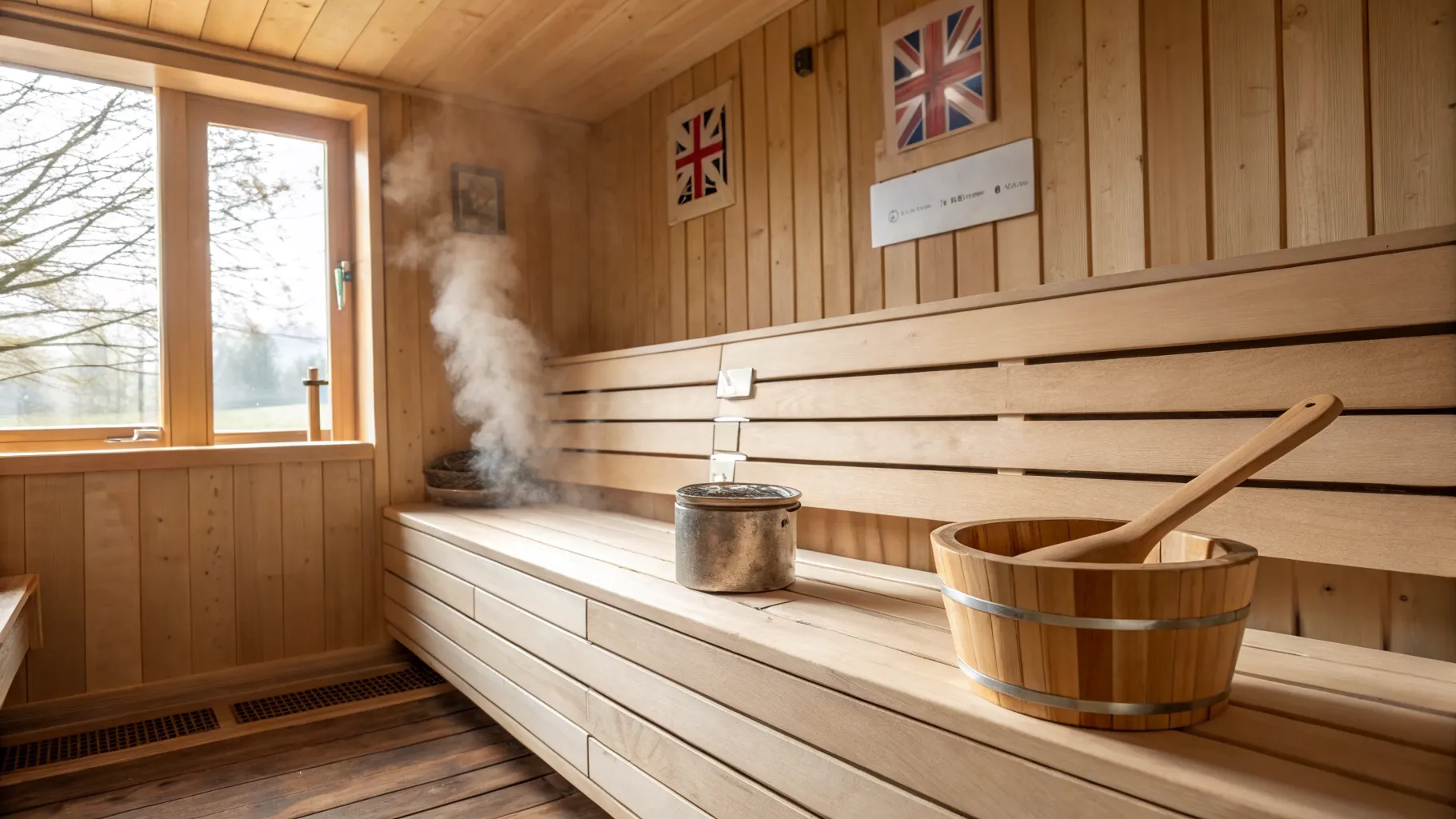
If you want the authentic high-heat Finnish ritual with steam, and you have space plus budget for an electrician, buy a traditional sauna. If you want a plug-in cabin that warms up fast, costs a fraction to run and lets you sit comfortably for longer, buy infrared. That is the short answer. The longer answer depends on your wiring, your room, your electricity bill and what you actually want a session to feel like, so here is how the two compare in detail for a UK home.
The core difference: how each one heats you
A traditional (Finnish) sauna heats the air. An electric or wood heater warms a pile of stones, the stones warm the room, and the hot air warms you. Pour water on the stones and you get loyly, a short burst of intense steam that spikes the perceived heat. These cabins run roughly 70 to 100C, most often 80 to 90C.
An infrared sauna does not really heat the air at all. Radiant panels emit infrared that warms your body directly, the way the sun feels warm on your skin even on a cold day. The air around you stays much cooler, typically 45 to 65C, which is why infrared feels gentler despite doing something to your body.
That single distinction drives almost every practical difference below: warm-up time, running cost, how long you can sit, and what installing one demands of your house.
Temperature, warm-up and session length
| Traditional (Finnish) | Infrared | |
|---|---|---|
| Air temperature | 70 to 100C (usually 80 to 90C) | 45 to 65C |
| Warm-up time | 30 to 45 min (some up to 60) | 10 to 20 min |
| Typical session | 10 to 20 min at high heat | 30 to 45 min |
| Steam / loyly | Yes, water on the stones | No |
| Heat feel | Intense, enveloping, hot air | Gentle, radiant, warm core |
The trade-off is real. A traditional sauna takes longer to get going because you are heating a whole room and pre-heating the rocks, but the session itself is short and hot. Infrared is usable in ten to twenty minutes because it only has to start warming you, and you can comfortably stay in for half an hour or more.
If you tend to find high heat unpleasant, or you want a longer, calmer sit, infrared wins on comfort. If a sauna without the hot-air slap and the steam does not feel like a sauna to you, that is a genuine and common reaction, and traditional is the honest choice.
Running cost: infrared is much cheaper per session
This is where most comparison pages quote vague or out-of-date electricity rates. Here are the numbers you can actually work from, against the Ofgem price cap: an average electricity unit rate of 24.67p per kWh for April to June 2026, rising to 26.11p per kWh for July to September 2026 (the average for direct debit customers in England, Scotland and Wales, including VAT; your regional rate will vary).
- Most domestic traditional electric heaters are 6 to 9 kW (four to five person cabins commonly 8 to 10 kW).
- Most one to two person infrared cabins draw roughly 1 to 3 kW.
Multiply the heater’s kW by the unit rate to get the cost per hour. A 7 kW traditional heater pulls almost five times the power of a 1.5 kW infrared cabin, so at the same unit rate it costs roughly four to five times more per hour to run. Infrared is commonly cited as using around 75% less electricity than a traditional sauna of comparable size.
Two caveats keep this honest. First, a traditional sauna warms up for longer before you even get in, so its real per-use energy is higher than the run-time figure alone suggests. Second, infrared sessions last longer, which claws a little of the gap back, but not nearly enough to change the verdict: infrared is the cheaper sauna to run, comfortably.
Installation: the part that decides it for many UK homes
This is the difference that often settles the choice before feel or cost even come into it.
Traditional: expect an electrician and notified work
A traditional electric heater almost always needs a dedicated hardwired circuit from the consumer unit (commonly 32A for larger units), an external rotary isolator switch outside the cabin, and RCD protection. You cannot just plug it into a wall socket.
A room containing a sauna heater is a special location under BS 7671, the IET Wiring Regulations, because of the heat, humidity, reduced clothing and lower skin resistance. Equipment inside must meet a minimum ingress protection of IPX4, and accessories sited within the cabin must be suitably rated.
That work is also notifiable under Part P of the Building Regulations in England: installing a new circuit, or altering a circuit in a special location like a sauna room, must be done by a registered competent electrician or notified to building control, with a Building Regulations Compliance Certificate issued. You can read the official guidance from Electrical Safety First. Budget for a qualified electrician, not a DIY afternoon.
Infrared: many cabins just plug in
Many one to two person infrared cabins are designed to run from a standard 13A socket, so no rewiring is needed. That single fact is why infrared suits flats, rentals and anyone who does not want a notifiable electrical job. Always check the spec of the specific cabin: larger or full-spectrum units can draw more and may need their own dedicated circuit.
For the full picture on circuits, isolators and floor protection, see our home sauna buying guide for the UK.
Ventilation and moisture in a British home
UK homes are often damp and tightly insulated, so moisture management matters more here than the brochures admit. A traditional sauna with loyly creates real humidity that needs an air path to clear, both for comfort and to protect the surrounding room. Infrared runs much drier, but the timber still needs airflow to dry out after each use or it can hold moisture and start to smell.
Whichever you choose, leave a ventilation gap, do not box the cabin into a sealed cupboard, and protect the floor underneath, especially in a garage or spare room.
Footprint and where it goes
The cabins are closer in size than people expect. A typical two-person infrared cabin is around 1.2m wide by 1.1m deep. A traditional cabin of similar capacity has a broadly similar footprint, but you must add clearance around the heater, the external isolator and the hardwiring overhead.
A one or two person cabin of either type can fit a spare room, a garage or a large bathroom. If you are unsure how much room to set aside, what size sauna do I need walks through capacity versus footprint.
The health evidence, told straight
The strongest sauna health research is built on traditional Finnish saunas, not infrared. The well-known Finnish cohort led by Dr Jari Laukkanen followed 2,315 middle-aged men for around 20 years and found that, compared with one sauna a week, two to three sessions a week were associated with around 23% lower risk of fatal coronary heart disease and cardiovascular disease, and four to seven sessions with around 48% lower risk. You can read the summary of the JAMA Internal Medicine study.
Those findings come from hot, traditional bathing. It is not honest to assume infrared shares them, because infrared was not studied. Infrared has its own appeal (gentle, sustainable, easy to use often), and used more often because it is comfortable is a legitimate benefit. Just be wary of dramatic infrared health claims; many are not well supported.
One more distinction worth knowing: far-infrared is the main heat source in most cabins, while near-infrared and red-light claims about skin and recovery come from photobiomodulation, a separate technology and evidence field. A cabin marketed as full spectrum is bundling those together. Treat the red-light claims as a different question from does this heat me well.
Brands worth knowing
For traditional heaters, Harvia is the obvious starting point: founded in 1950 and now headquartered in Muurame, Finland, it is the world’s largest sauna heater maker, and its KIP is a popular residential wall-mounted electric model, sold in the UK through distributors. HUUM, an Estonian brand, is the design-led alternative, known for open rock-basket heaters such as the DROP and HIVE that give a softer, more generous loyly. See our Harvia and HUUM context in the wood-fired versus electric guide if you are also weighing fuel type.
For complete cabins, UK specialists such as Finnmark Sauna supply traditional, infrared and hybrid units, and infrared-focused retailers such as Clearlight Saunas UK and Vidalux publish running-cost guidance. Buy from a UK supplier so you get the right voltage, a warranty you can actually claim against, and parts.
What about a hybrid?
Hybrid cabins exist that combine infrared panels with a small traditional heater in one unit, so you can run infrared only, traditional only, or both. A hybrid suits a household that genuinely wants both: a quick gentle infrared sit on a weeknight, and a proper hot loyly session at the weekend. The catch is that you inherit both sets of demands. The traditional heater still has to meet special-location wiring rules (a UK hybrid will typically pair its infrared panels with a traditional unit such as a Harvia heater), and it costs more than either type alone. Worthwhile if you will use both modes; overkill if you bought it to be safe.
Who each one suits
Choose traditional if you want the authentic high-heat ritual and the steam of loyly, you have a settled spot with space for clearance and an isolator, and you are happy to bring in an electrician for a dedicated, notified circuit. The heart-health evidence base is also strongest here.
Choose infrared if you want low running cost, fast warm-up, plug-in installation with no rewiring, a gentler heat you can sit in for longer, and a cabin that fits a flat, a rental or a spare room without building work.
If you have landed on infrared, our infrared sauna guide for the UK covers panel types, full-spectrum versus far-infrared and what to look for. If you want a shortlist of cabins, see the best home saunas in the UK.
Frequently asked questions
Is an infrared sauna a real sauna? It depends on your definition. It does not produce the hot air or steam of a Finnish sauna, so purists say no. It does warm your body and induce a sweat, just at a lower air temperature, so functionally it is a sauna of a different kind. If the loyly ritual is the point for you, you want traditional.
How much does it cost to run an infrared sauna vs a traditional sauna in the UK? Multiply the heater’s power rating by your electricity unit rate. At the Ofgem cap (an average of 24.67p per kWh for April to June 2026), a 1.5 kW infrared cabin draws a fraction of the power of a 7 kW traditional heater, so a traditional session typically costs about four to five times more per hour to run.
Do I need an electrician or special wiring to install a home sauna? For a traditional electric sauna, almost always yes: it needs a dedicated hardwired circuit, an external isolator and RCD protection, and the work is notifiable under Part P in England. Many infrared cabins avoid this entirely by plugging into a normal socket.
Can an infrared sauna just plug into a normal 13A socket? Many one to two person infrared cabins are designed to do exactly that, so no rewiring is needed. Always check the spec of the specific cabin, because larger or full-spectrum units can draw more and may need a dedicated circuit.
How long does each type take to heat up? A traditional sauna typically needs 30 to 45 minutes (sometimes up to 60) to heat the room and rocks. An infrared cabin is usable in roughly 10 to 20 minutes because it warms you rather than the air.
Do infrared saunas have the same heart-health benefits as traditional Finnish saunas? The cardiovascular evidence, including the long-running Laukkanen cohort, is based on traditional Finnish saunas, not infrared. It is not safe to assume infrared shares those findings, because infrared was not what was studied.
What temperature does each type reach? Traditional saunas run roughly 70 to 100C, most often 80 to 90C. Infrared cabins stay much cooler at around 45 to 65C, which is why people can sit in them comfortably for longer.
Can I put a sauna in a spare room, garage or bathroom? Yes, a one or two person cabin of either type can fit those spaces. Allow for ventilation, protect the floor, and remember a traditional unit still needs its dedicated circuit and isolator wherever it goes.
Do home saunas need building regulations approval in the UK? The electrical work for a traditional sauna does. Installing a new circuit or altering one in a sauna room is notifiable under Part P in England and must be certified by a registered electrician or notified to building control. A plug-in infrared cabin generally avoids notifiable work.
What is loyly, and can an infrared sauna do it? Loyly is the burst of steam you get when you pour water on the hot stones of a traditional heater. Infrared saunas have no stones and no steam, so they cannot produce loyly.
Is near-infrared or far-infrared better? They do different jobs. Far-infrared is the main heat source in most cabins. Near-infrared and red light relate to photobiomodulation (skin and recovery claims), which is a separate technology and evidence field, so judge heat quality and red-light claims as two different questions.
Is a hybrid sauna worth it? It is worth it if you genuinely want both gentle infrared sessions and hot traditional ones. Be aware it still carries the traditional unit’s wiring and compliance requirements and costs more than either type alone.
Which is cheaper to buy and maintain? Entry-level plug-in infrared cabins tend to be cheaper to get running because they avoid an electrician’s bill, and they cost far less per session. Traditional saunas add the install cost and higher running cost, though a quality heater and cabin can be very durable.
More from Baltic Spa
 Reviews
The Best Public Saunas in London for 2026, Tested and Ranked
We tested and ranked the best public saunas in London for 2026, from £9.50 community baths to Canary Wharf's 60-person contrast therapy hall.
 Infrared Saunas
Infrared Sauna Blankets: How They Work and Who They Suit
How an infrared sauna blanket works, what the layers and EMF claims really mean, who they suit and who should avoid one, from an evidence-first UK guide.
Sauna Stones Calculator: How Many Kg of Stones Do You Need?
Free sauna stones calculator: enter your electric heater's kW or your wood stove size and get the recommended stone weight in kg, plus how many boxes to buy.