Wood-Fired vs Electric Saunas: The UK Owner's Comparison
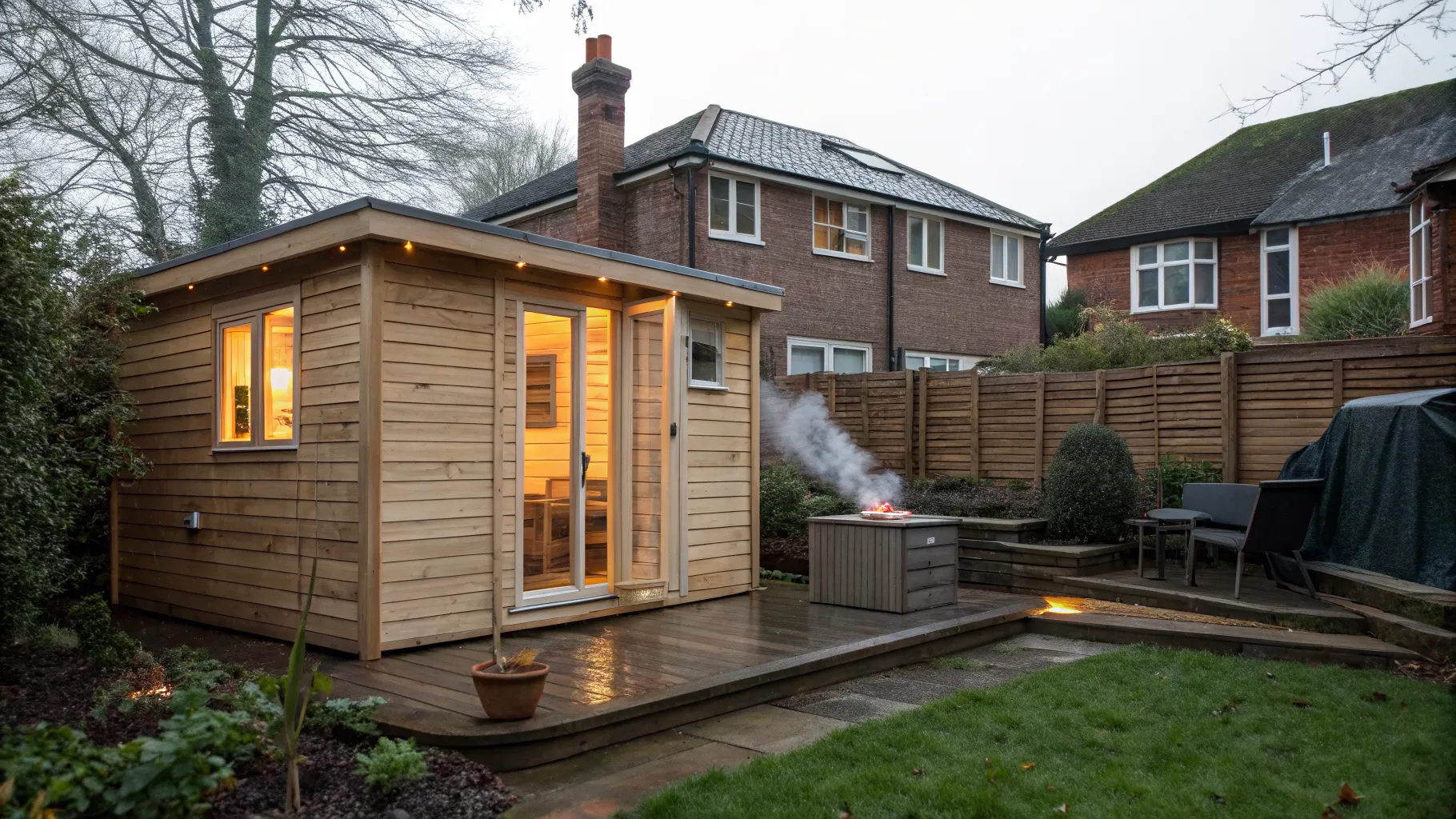
For most UK buyers, the choice between a wood-fired and an electric sauna is settled before anyone talks about heat or löyly. It comes down to two practical questions: does your garden have a suitable electricity supply, and does your property sit inside a Smoke Control Area? Answer those honestly and the decision often makes itself. Wood-fired gives you the ritual, the biggest stone load and off-grid freedom, but it carries heavier regulation and a slower burn. Electric is push-button, urban-friendly and controllable by timer or app, but it needs proper wiring and, past a certain size, a serious supply. This guide covers both, with the British regulations competitor pages tend to gloss over.
Quick verdict
Choose electric if your garden has, or can easily get, a 230V supply via a qualified electrician, you want timer or app control, you live in a town or city (most are Smoke Control Areas), or you simply want to press a button and walk in 30 to 45 minutes later.
Choose wood-fired if you have space and the right setting (rural, large garden, no Smoke Control Area restriction), you want the softest, longest-lasting heat from a big stone load, you may want to run off-grid, and you genuinely enjoy tending a fire rather than seeing it as a chore.
Everything below explains why.
How each one works
An electric sauna uses a wall- or floor-mounted heater element that warms a tray of stones. You control it with a thermostat and timer, and many modern units (HUUM and Harvia electric models, for example) add app control so you can start heating from your phone. Water thrown on the stones still produces löyly, so the steam ritual is not lost.
A wood-fired sauna uses a stove (the kiuas) burning logs, with a basket of stones sitting over or around the firebox. There is no thermostat: you manage temperature by how you build and feed the fire. A flue carries smoke up and out through the roof. Brands like Harvia, Narvi, IKI, Kastor and Tulikivi (soapstone) dominate this category. The Harvia M3, a long-standing best-selling wood sauna stove, is a typical example, rated 16.5kW with a stainless front and a 115mm flue, suited to cabins of roughly 6 to 13 cubic metres.
Heat and löyly: the experiential argument
This is where wood-fired earns its devoted following. A well-fired wood stove can hold a far larger stone load, and more stone means more thermal mass: the heat feels softer, more enveloping and builds gradually. The löyly from a good wood stove is often considered the best you can get, wetter and rounder without being harsh, and it comes with the crackle of the fire and a faint wood aroma. It is a multi-sensory thing.
Electric heat can feel sharper and drier by comparison, and the burst of steam from water on a smaller stone tray tends to be quicker and more aggressive. The gap is real but easy to overstate: a quality electric heater with a decent stone load still gives a very good löyly. If softness of heat is your priority, wood leads; if convenience matters more, electric is no hardship.
| Electric | Wood-fired | |
|---|---|---|
| Stone capacity | around 20 to 40 kg | often 60 kg up to 100 kg or more (some large IKI models well over 100 kg) |
| Heat character | sharper, drier, fast steam | softer, enveloping, gradual |
| Control | thermostat, timer, often app | manage the fire by hand |
| Holds heat | needs to keep running | holds 3 to 4+ hours once established |
If you are also weighing up the heat style of other systems, our guide to traditional vs infrared saunas covers how each delivers warmth to the body.
Heat-up speed
Plan your evening around this. An electric sauna typically reaches around 70 to 80°C in roughly 30 to 45 minutes, with some smaller units ready in 20 to 30. A wood-fired sauna rewards patience: expect 40 to 90 minutes depending on outdoor temperature, the size of the cabin and the dryness of your wood. On a cold, damp British evening you will be at the longer end. A bio or combi heater, which adds a steam channel to an electric element, sits in between at roughly 30 to 40 minutes.
Running costs in the UK (2026)
The myth worth correcting first: wood is not automatically cheaper to run. At current British electricity prices, the two are broadly comparable, and wood only pulls clearly ahead if you source or season your own logs.
For reference, the Ofgem price cap for 1 July to 30 September 2026 sets electricity at 26.11p per kWh on a Direct Debit tariff, including VAT, with a daily standing charge on top. You can check the latest figure on the Ofgem energy price cap page.
- Electric (6kW heater): warming up draws roughly 6 kWh, and a full session of around an hour, including the warm-up, costs a modest single-figure sum at the current rate. Regular use, several sessions a week, lands in the low tens of pounds per month.
- Wood-fired: a session burns roughly 4 to 6 kg of dry hardwood. Bought by the bundle or cubic metre, that is a comparable per-session cost to electric. Twice-weekly use adds up to a similar monthly figure. The picture changes entirely if you have free or self-felled wood, where fuel cost approaches zero.
So the running-cost argument is close to a wash for most people. Decide on the experience, the supply and the rules instead.
Sizing an electric heater: the 1 kW per m³ rule
If you go electric, getting the heater size right matters more than the brand. The standard rule of thumb, used by manufacturers including Harvia, is about 1 kW per 1 cubic metre of well-insulated sauna volume. Add roughly 1.2 cubic metres of equivalent volume for every square metre of glass, exposed stone or uninsulated surface, and apply a factor of around 1.5 for uninsulated log walls. Always round up to the next available heater.
Worked example: a room measuring 2.0 x 1.8 x 2.1 metres is 7.56 cubic metres. With a glass door, the calculated volume rises to roughly 8.5 cubic metres, which points to a 6kW heater. Harvia’s own heater-power guidance walks through the same calculation. If you are still deciding on dimensions, our piece on what size sauna do I need helps you settle the footprint first.
Installation and UK regulations
This is the layer most pages skim, and it is the part that decides whether your sauna is legal and insurable.
Electric: Part P and BS 7671
An electric sauna heater is a fixed electrical installation. It must be wired and certified by a qualified electrician, comply with the BS 7671 wiring regulations, and be notified under Building Regulations Part P (electrical safety). Smaller heaters may run on a 16A circuit, but typical domestic units need a dedicated 32A or 40A circuit. Heaters above roughly 6kW commonly require a strong 230V single-phase supply, and the largest units may need 400V three-phase. If your garden cabin has no power run to it yet, factor in the cost and disruption of getting a certified supply out there.
Wood-fired: Part J and a carbon monoxide alarm
A wood-burning stove is a combustion appliance, so it falls under Approved Document Part J (combustion appliances and fuel storage). In practice that means the correct flue diameter and height with safe termination, the right clearances from combustible timber, a non-combustible hearth and wall heat shields, an adequate combustion air supply sized to the stove’s output, and an audible carbon monoxide alarm in the same room, which is a requirement, not an optional extra. Test it regularly. A registered installer, for example one on the HETAS scheme, is strongly advised because the install is notifiable, and many home insurers will want an annual chimney sweep as a condition of cover.
Planning permission and Smoke Control Areas
Permitted development
A garden sauna cabin in England usually counts as an outbuilding under Permitted Development, meaning no full planning application, provided it is not forward of the principal (front) elevation of the house, it is no more than 2.5 metres high if it sits within 2 metres of a boundary, and outbuildings cover no more than 50% of the garden. You are more likely to need permission if the property is listed, sits in a conservation area, National Park or AONB, or if a flue extends well above the roofline. Confirm with your local planning authority before you order anything. Our home sauna buying guide for the UK and the outdoor vs indoor sauna comparison go deeper on siting a cabin in a British garden.
The Smoke Control Area trap
This is the single biggest gotcha for wood-fired, and most pages miss it. Much of urban Britain, including all of Greater London and most large towns and cities, is designated a Smoke Control Area. Inside one, you may face a penalty of up to £300 if your chimney releases smoke, and buying unauthorised fuel for a non-approved appliance can bring a fine of up to £1,000, as set out on the government’s Smoke Control Area rules page.
In a Smoke Control Area you may only burn authorised smokeless fuels, or burn wood in a DEFRA-exempt appliance. The catch: most wood-burning sauna stoves are not on the DEFRA exempt list. For a large share of urban buyers, that effectively rules out wood-fired and makes electric the practical and legal choice. Check your address’s Smoke Control Area status with your local council before you commit to a wood stove.
Maintenance
Electric is the lighter routine. Replace the stones every 6 to 12 months as they crack and crumble, and have the heater serviced every couple of years. That is broadly it.
Wood-fired asks more of you. Rake out the ash after each use, check the door seal and glass weekly, inspect the flue monthly for soot build-up, and book an annual professional chimney sweep. None of it is difficult, but it is a regular commitment, and the carbon monoxide alarm needs testing throughout.
Decision matrix
| Your situation | Better fit |
|---|---|
| Town or city address (likely Smoke Control Area) | Electric |
| Rural, no smoke restrictions, large garden | Wood-fired |
| Want timer or app control, busy household | Electric |
| Want the softest, longest-lasting löyly | Wood-fired |
| Off-grid or no power to the cabin | Wood-fired |
| Want minimal maintenance | Electric |
| Enjoy tending a fire as part of the ritual | Wood-fired |
| Need it hot fast on a weeknight | Electric |
If you are leaning towards a wood-fired cabin, the barrel sauna guide covers a popular off-grid-friendly format.
Frequently asked questions
Which is cheaper to run in the UK? They are broadly comparable at current price-cap electricity rates. A wood-fired session and an electric session cost a similar amount per use once you buy firewood by the bundle. Wood only wins clearly if you source or season your own logs for free, in which case its running cost is close to nothing.
Do I need planning permission for a garden sauna? Usually not. Most garden sauna cabins fall under Permitted Development as outbuildings, provided they sit behind the front of the house, stay under 2.5 metres high within 2 metres of a boundary, and do not cover more than half the garden. You are more likely to need permission for a listed building, a conservation area, National Park or AONB, or a tall flue. Always confirm with your local planning authority.
Will a wood-burning sauna stove be legal where I live? Not always. If you live in a Smoke Control Area, which covers most large UK towns and all of Greater London, you can only burn wood in a DEFRA-exempt appliance, and most sauna stoves are not exempt. That can make wood-fired effectively unusable and push you towards electric. Check your council’s Smoke Control Area status before buying.
Which gives better steam and löyly? Wood-fired generally produces the softer, rounder löyly thanks to its larger stone load and thermal mass. Electric still allows you to throw water on the stones for steam, but the burst tends to be quicker and sharper. The difference is real but smaller than enthusiasts sometimes suggest.
How quickly does each heat up? An electric sauna reaches usable temperature in roughly 30 to 45 minutes, sometimes less for small units. A wood-fired sauna takes around 40 to 90 minutes depending on the weather, the cabin size and how dry your wood is.
What size heater do I need? For an electric sauna, use about 1 kW per cubic metre of well-insulated volume, adding extra for glass and uninsulated surfaces and rounding up. As a guide, a small two-person cabin with a glass door typically needs a 6kW heater.
Do I need a special electricity supply? Often, yes. Small heaters can run on a 16A circuit, but most domestic units need a dedicated 32A or 40A circuit, and heaters above about 6kW may need a 230V single-phase or even 400V three-phase supply. A qualified electrician must install and certify it under Part P.
Can I control a wood-fired sauna’s temperature? Only by managing the fire. There is no thermostat, timer or app: you adjust the heat by how you build and feed it. If push-button or scheduled control matters to you, choose electric.
Which is safer? Both are safe when installed correctly. Wood-fired carries a carbon monoxide risk and needs proper flue clearances, a non-combustible hearth and a CO alarm in the room. Electric carries the usual electrical risks and must be certified by a qualified electrician. The key for either is a competent, registered installer.
Can I get a sauna if I have no power? Yes, a wood-fired sauna is the off-grid answer. It needs no mains electricity at all, which is why it suits remote plots, allotments and rural gardens without a supply run out to the cabin.
Which should a first-time UK owner pick? For most people in a town or city, electric is the sensible default: simpler to install, legal in a Smoke Control Area, and ready at the press of a button. Wood-fired is the reward for those with the right rural setting, the space, and a genuine love of tending the fire for the best heat there is.
More from Baltic Spa
 Reviews
The Best Public Saunas in London for 2026, Tested and Ranked
We tested and ranked the best public saunas in London for 2026, from £9.50 community baths to Canary Wharf's 60-person contrast therapy hall.
 Infrared Saunas
Infrared Sauna Blankets: How They Work and Who They Suit
How an infrared sauna blanket works, what the layers and EMF claims really mean, who they suit and who should avoid one, from an evidence-first UK guide.
Sauna Stones Calculator: How Many Kg of Stones Do You Need?
Free sauna stones calculator: enter your electric heater's kW or your wood stove size and get the recommended stone weight in kg, plus how many boxes to buy.