How Much Wood for a Sauna? Kg Per Firing Calculator
A wood fired sauna does not burn a fixed number of logs. It burns whatever energy your cabin, your stones and your stove ask for, and moisture content changes the answer more than log size does: seasoned wood at 20 per cent gives about 4.1 kWh per kilo, the same wood at 35 per cent gives about 3.2, so a damp stack can cost you nearly 30 per cent more wood for the same heat. Put your cabin's numbers in below and this calculator works out the kilos per firing, roughly how many logs that is, and what it adds up to over a week, a year and a bulk bag.
Your cabin and stove
Your wood
The calculator heats four things, because all four take real energy: the air in the cabin, the timber lining and benches, the stones, and the steel of the stove itself. Stones are the part people forget. Eighty kilos of stone taken to a working temperature swallows more energy than the air in the room does, which is why a stove with a big stone load takes a long first fire and then holds its heat for hours.
Why moisture content decides your log pile
Oven dry wood holds roughly 5.3 kWh per kilo. Water in the wood does two things to that: it takes the place of fuel, and it has to be boiled off before the rest will burn properly, which costs about 0.68 kWh for every kilo of water. Work it through and seasoned wood at 20 per cent moisture gives about 4.1 kWh per kilo, part seasoned wood at 35 per cent about 3.2, and green wood at 50 per cent about 2.3. That is the whole argument for a dry log store in one line: the same stack does far less work wet, and the unburnt tars it sends up the flue are what line a chimney ready for a fire.
Species matters much less by weight than people assume. A kilo of dry ash and a kilo of dry spruce carry nearly the same energy. What changes is density, so a cubic metre of hardwood holds more kilos than the same volume of softwood, and that is why hardwood looks better value by the bag. Buy by weight where you can, and check the supplier states the bag weight, not just its volume.
Getting a faster, cleaner burn
Light the fire top down, with kindling above the split logs rather than under them, and the load burns off its smoke instead of smouldering. Keep the air control open for the first twenty minutes so the flue gets hot quickly, then trim it back. Small splits, around 8cm across, beat fat rounds in a sauna stove because the stove is asked for a short fierce fire rather than a slow overnight burn. If you find yourself adding wood for two hours and the bench never quite gets there, the problem is usually the cabin, not the stove: see the heat-up time calculator and the sauna stones calculator, and if you are still choosing between fuels, our comparison of wood fired and electric saunas and the wood fired sauna buying guide set out the trade-offs. For the electric alternative, the running cost calculator gives the bill per session.
More from Baltic Spa
 Reviews
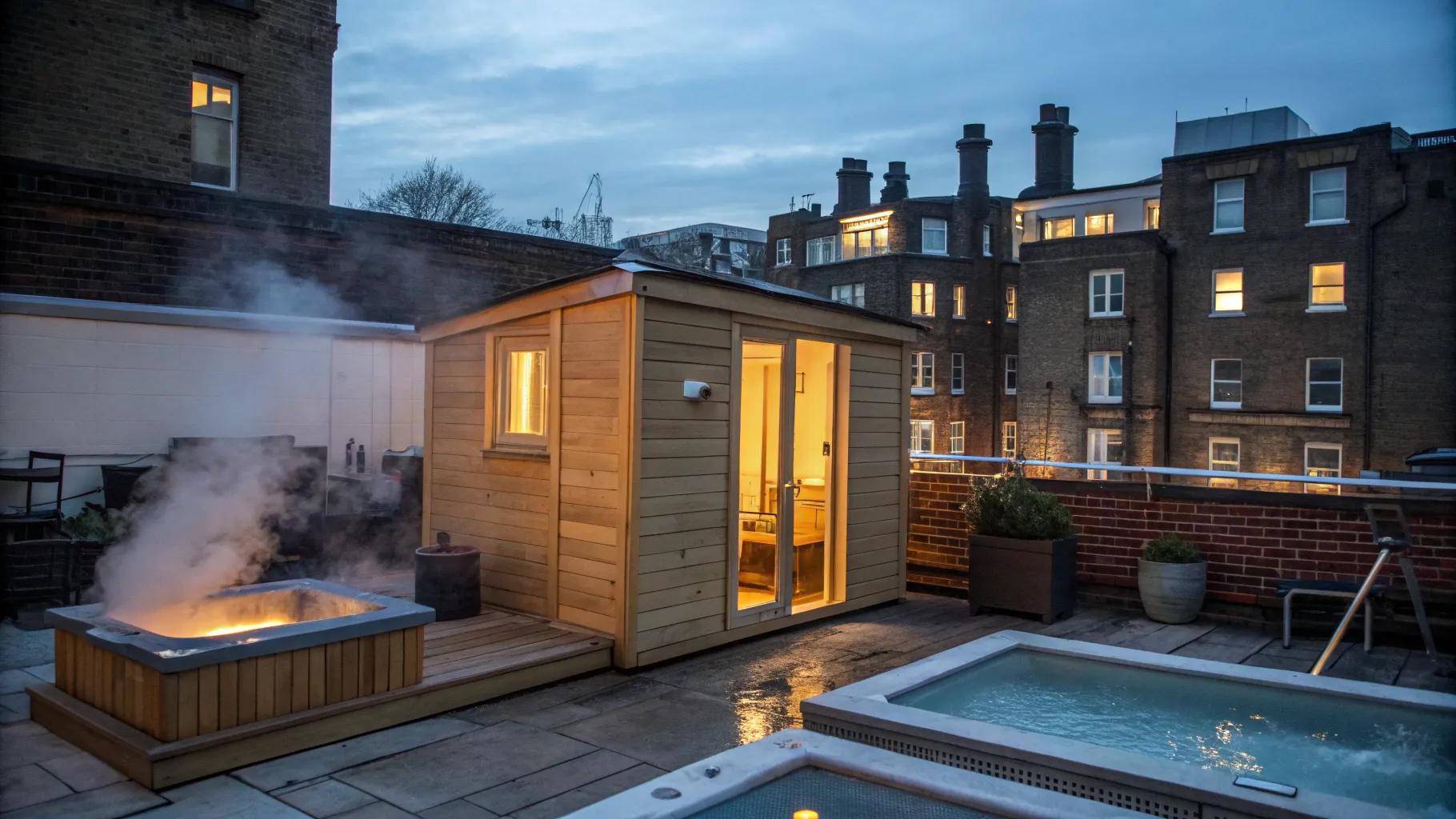
The Best Public Saunas in London for 2026, Tested and Ranked
We tested and ranked the best public saunas in London for 2026, from £9.50 community baths to Canary Wharf's 60-person contrast therapy hall.
 Infrared Saunas
Infrared Sauna Blankets: How They Work and Who They Suit
How an infrared sauna blanket works, what the layers and EMF claims really mean, who they suit and who should avoid one, from an evidence-first UK guide.
Sauna Stones Calculator: How Many Kg of Stones Do You Need?
Free sauna stones calculator: enter your electric heater's kW or your wood stove size and get the recommended stone weight in kg, plus how many boxes to buy.