Outdoor vs Indoor Saunas: Which Suits a UK Property?
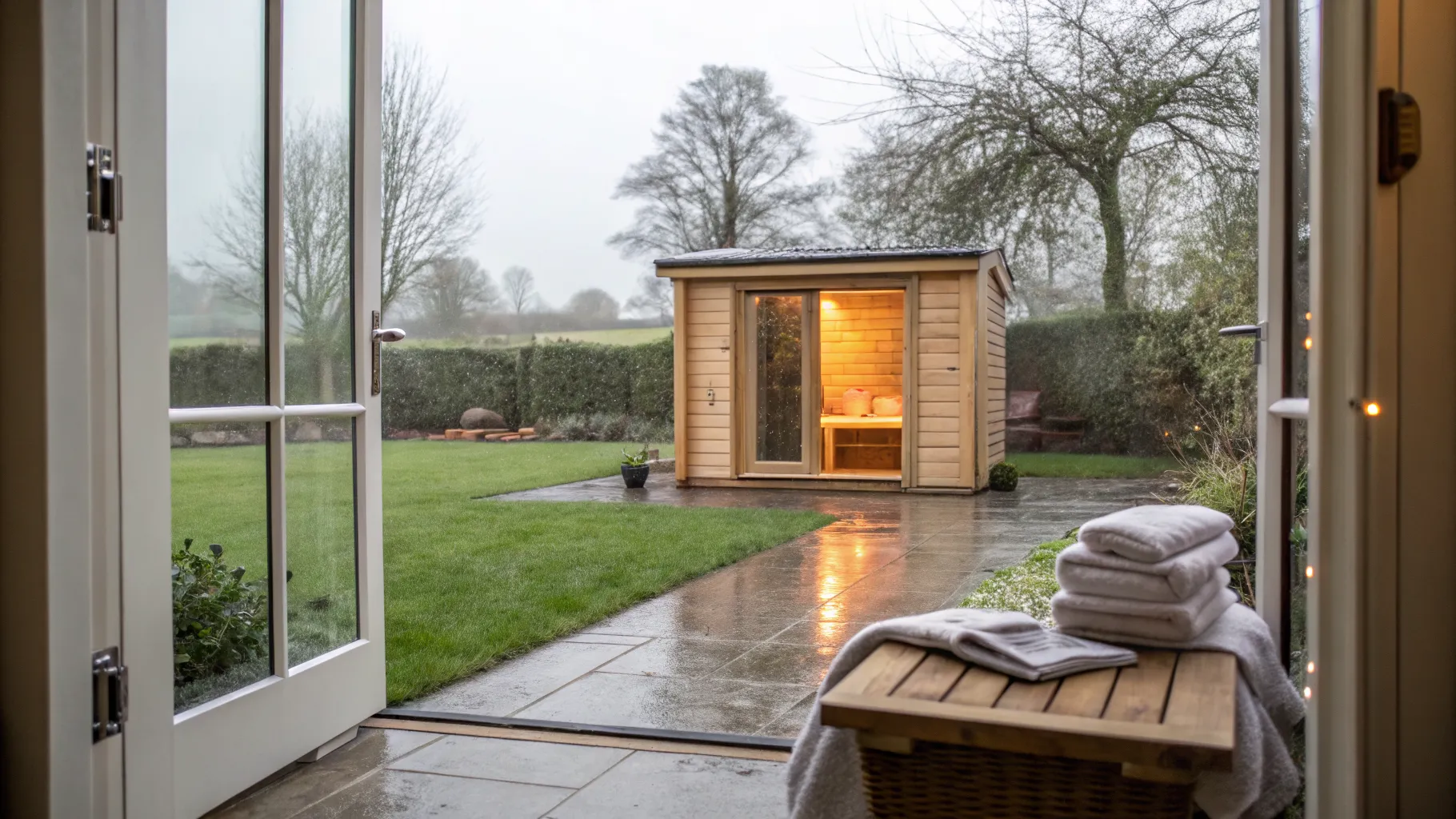
The outdoor versus indoor sauna question is really a question about your property, not about saunas. A detached house with a level garden and spare capacity in the consumer unit suits an outdoor cabin. A terraced house in a city smoke control area, or a home with a dry garage or basement going spare, often suits an indoor install better. The sauna experience itself is broadly the same once the room is hot; what differs is planning law, wiring, ground works, weather exposure and running cost. This guide works through each, using the actual UK rules.
Home saunas are riding a genuine wave here. The British Sauna Society census counted 45 public saunas in the UK in January 2023 and 147 by January 2025, with 213 wild and pop-up saunas by May 2025, double the year before. Plenty of those visitors come home wanting their own, and the first fork in the road is garden or house.
Planning rules: the outdoor sauna’s first hurdle
Good news first: the Planning Portal explicitly lists sauna cabins among the outbuildings covered by permitted development, so most garden saunas need no planning application at all. The conditions, set out on the official outbuildings page, are specific:
- Single storey only, with maximum eaves height of 2.5m.
- Maximum overall height of 4m with a dual-pitched roof, or 3m for any other roof shape.
- If any part sits within 2m of a boundary, the whole structure is capped at 2.5m total height. Most garden saunas go near a fence, so this 2.5m figure is the one that usually bites.
- Nothing forward of the principal elevation (the front of the house, in most cases).
- Outbuildings and extensions together must not cover more than 50 per cent of the land around the original house.
Three situations change the picture. On designated land (National Parks, the Broads, Areas of Outstanding Natural Beauty, World Heritage Sites), an outbuilding more than 20m from the house is limited to 10 square metres, and structures at the side of the property need permission. Within the curtilage of a listed building, any outbuilding needs planning permission, full stop. And permitted development only covers buildings “incidental to the enjoyment of the dwellinghouse”: if you plan to charge for sessions or offer the sauna as a holiday-let perk, that commercial use can trigger a change-of-use application even though the cabin itself was permitted.
An indoor sauna sidesteps all of this. Putting a sauna cabin inside an existing garage, basement or spare room is internal work, not development, so for most homes there is no planning question at all. For a listed interior, speak to your conservation officer before fixing anything to the fabric.
The smoke control trap for wood-fired garden saunas
This is the rule that quietly decides the question for many urban buyers. Most UK cities and large towns are smoke control areas. The gov.uk smoke control rules allow outdoor burning in barbecues, chimineas, fireplaces and pizza ovens, but the moment smoke is released through a chimney on a building, which includes the flue on a garden sauna cabin, you must either burn authorised fuel or use a Defra-exempt appliance.
Many wood-fired sauna stoves are not on the Defra exempt list. You can check any specific model on the exempt appliance database at smokecontrol.defra.gov.uk before buying. Get it wrong and the penalties are real: in England the council can issue a financial penalty for smoke from a chimney, and buying unauthorised fuel for a non-exempt appliance is a finable offence.
So if you live in a smoke control area and your heart is set on wood-fired, your realistic options are a verified exempt stove or authorised fuel. Otherwise, an electric heater outdoors, or an indoor sauna, solves the problem entirely. If you do install a wood-burning stove anywhere in England or Wales, the work falls under Approved Document J of the Building Regulations; a HETAS-registered installer can self-certify it, which saves a building notice through the council.
Electrics: the same rules indoors and out, but different money
Forget the idea of plugging a proper sauna heater into a wall socket. Anything above roughly 3kW, which is almost every traditional heater, needs a dedicated circuit from the consumer unit, commonly 32A, with RCD protection and a local isolator. Sauna electrical work is notifiable under Part P of the Building Regulations, so it needs a registered electrician or a building control notification either way. (Low-powered infrared cabins are the exception; our traditional versus infrared comparison covers that route.)
The difference between indoor and outdoor is the cable run. An indoor sauna in a garage or basement usually sits near the consumer unit, so the run is short and simple. An outdoor sauna needs buried steel wire armoured (SWA) cable trenched down the garden, and the longer the garden, the bigger the job. A short, simple run is a modest job; a long run down a big garden is a substantial one, and if your consumer unit has no spare capacity, upgrading it adds a second substantial job on top. This line item surprises more outdoor-sauna buyers than any other.
Heat-up time and running cost
Indoor saunas start with an advantage: the room around them is already at house temperature, so heat-up is shorter and the heater works less to hold temperature. An outdoor cabin in a British January starts from low single digits and loses heat to the weather throughout the session, especially uninsulated formats like barrels (more on that in our barrel sauna guide).
The numbers are smaller than people fear, though. A 6 to 8kW heater pulls full power for the first 30 to 40 minutes, then drops to roughly half to maintain temperature. A full session including heat-up uses about 9 to 13kWh. What that costs depends on your electricity unit rate; most households pay the Ofgem price cap rate, which changes every quarter, so run your own numbers with the sauna running cost calculator. Even at three sessions a week, the electricity is a modest line on the bill rather than a frightening one.
One practical equaliser for outdoor cabins: Wi-Fi heater control. Harvia’s Cilindro line is sold in the UK in 6.6kW, 6.8kW, 9kW and 10.8kW domestic models, and the Wi-Fi versions pair the Xenio Wi-Fi control with the MyHarvia app, so you can start the cabin heating from the sofa and walk out to a ready sauna.
Side by side
| Outdoor sauna | Indoor sauna | |
|---|---|---|
| Planning | Usually permitted development, but 2.5m cap near boundaries; stricter on designated land; always needs permission at a listed property | None for internal work in most homes |
| Smoke control areas | Wood-fired stoves caught by chimney rules unless Defra-exempt | Not an issue with electric heat |
| Electrics | 32A dedicated circuit plus buried SWA cable; cost scales with garden length | Same circuit rules, but shorter and cheaper runs |
| Heat-up | Slower in winter; uninsulated formats lose heat fastest | Faster, helped by the house’s warmth |
| Ground works | Needs a hard, flat, level base, typically a concrete slab to the maker’s spec; never grass | Existing concrete garage or basement floor often does the job |
| Weather and upkeep | Timber faces rain and frost year round; exterior treatment is ongoing | No weathering; the job is ventilation and moisture management |
| Space cost | Uses garden, not floorplan | Gives up a room or part of one |
| Purchase cost | Highest of the pre-built routes once base, electrics and delivery access are included | Typically cheaper installed; DIY material builds cheapest of all |
On the money: quality outdoor cabins generally cost more than equivalent indoor installs once you add the base, the cable trench and delivery access, and bespoke builds cost considerably more either way. Specific prices move constantly, so check current figures with UK suppliers; our home sauna buying guide breaks down the cost layers in detail.
Site requirements people miss
Outdoor: the base. A garden sauna cannot sit on grass. It needs a hard, flat, level base, typically a concrete slab to the thickness the maker specifies, or a properly laid paved or screw-pile base. Soft or sloping ground means ground works before the cabin even arrives, and delivery access matters too: a pre-assembled barrel has to physically reach the back garden.
Indoor: ventilation and moisture. A sauna pushes heat and humidity into the surrounding room, so it needs ventilation and sensible moisture management. This is why garages and basements are the favoured indoor spots: concrete floors shrug off drips, ceiling heights usually accommodate a cabin, and the space is already separated from living areas. Bathrooms can work for compact cabins where the extraction is good.
Which suits your property
- Terraced or semi in a city (smoke control area, small yard): indoor electric, or a compact outdoor electric cabin if the yard takes a base. Skip wood-fired unless the stove is verifiably Defra-exempt.
- Detached house with a decent garden: the classic outdoor cabin territory. Budget properly for the slab and the SWA run, keep the cabin 2m off the boundary if you want more than 2.5m of height, and wood-fired becomes realistic outside smoke control areas.
- Flat, or house with a spare garage or basement: indoor is the obvious answer. The concrete floor and short cable run make a garage conversion the cheapest path to a proper hot sauna.
- Listed building or designated land: talk to the planning department before spending anything. Indoors may be the only permission-free route at a listed property.
- Holiday let or paid sessions planned: get planning advice early; commercial use can need a change-of-use application even when the building itself would have been permitted development.
Frequently asked questions
Do I need planning permission for a sauna in my garden? Usually not. The Planning Portal lists sauna cabins as outbuildings covered by permitted development, provided you stay within the limits: single storey, 2.5m eaves, 4m maximum height with a dual-pitched roof (3m otherwise), 2.5m total if within 2m of a boundary, nothing in front of the house, and no more than 50 per cent of the garden covered. Listed buildings always need permission, and designated land carries extra limits.
Can a sauna run off a normal 13A plug? Not a traditional one. Heaters above about 3kW need a dedicated circuit from the consumer unit, commonly 32A, with RCD protection and an isolator, and the work is notifiable under Part P, so it needs a registered electrician. Only low-powered infrared cabins plug in.
Can I have a wood-fired sauna in a smoke control area? Only if the stove is on the Defra exempt appliance list or you burn authorised fuel, because a flue on a garden building counts as a chimney under the rules. Many wood-fired sauna stoves are not exempt. Smoke from a non-compliant chimney can bring a council penalty, and buying unauthorised fuel for a non-exempt appliance is a finable offence.
Can an outdoor sauna sit on grass or decking? Not on grass. It needs a hard, flat, level base, typically a concrete slab built to the supplier’s specification or a solid paved or screw-pile base. Decking is a question for the supplier and depends on the structure beneath it; most makers specify a slab.
Is an indoor sauna cheaper to run than an outdoor one? Slightly. An indoor cabin starts from room temperature and is sheltered from wind and rain, so it heats faster and holds temperature with less work. Either way a full session uses roughly 9 to 13kWh; the cost depends on your electricity unit rate, which for most households follows the Ofgem price cap and changes quarterly.
Can my holiday-let guests use the sauna? Be careful. Permitted development requires the building to stay incidental to the enjoyment of the house, and commercial use such as paid bookings or a let perk can trigger a change-of-use planning application. Check with your local planning authority before advertising it.
More from Baltic Spa
 Reviews
The Best Public Saunas in London for 2026, Tested and Ranked
We tested and ranked the best public saunas in London for 2026, from £9.50 community baths to Canary Wharf's 60-person contrast therapy hall.
 Infrared Saunas
Infrared Sauna Blankets: How They Work and Who They Suit
How an infrared sauna blanket works, what the layers and EMF claims really mean, who they suit and who should avoid one, from an evidence-first UK guide.
Sauna Stones Calculator: How Many Kg of Stones Do You Need?
Free sauna stones calculator: enter your electric heater's kW or your wood stove size and get the recommended stone weight in kg, plus how many boxes to buy.